Eritrea – A Land at the Red Sea: Where History and Diversity Collide
Imagine a narrow strip of land along the Horn of Africa, where the Red Sea meets endless high plateaus, ancient ruins stand next to modern colonial buildings, and nine different peoples have lived together in remarkable unity for centuries. That is Eritrea – a country that packs an incredible cultural and historical density into just 121,000 km² (roughly the size of Austria and Switzerland combined).
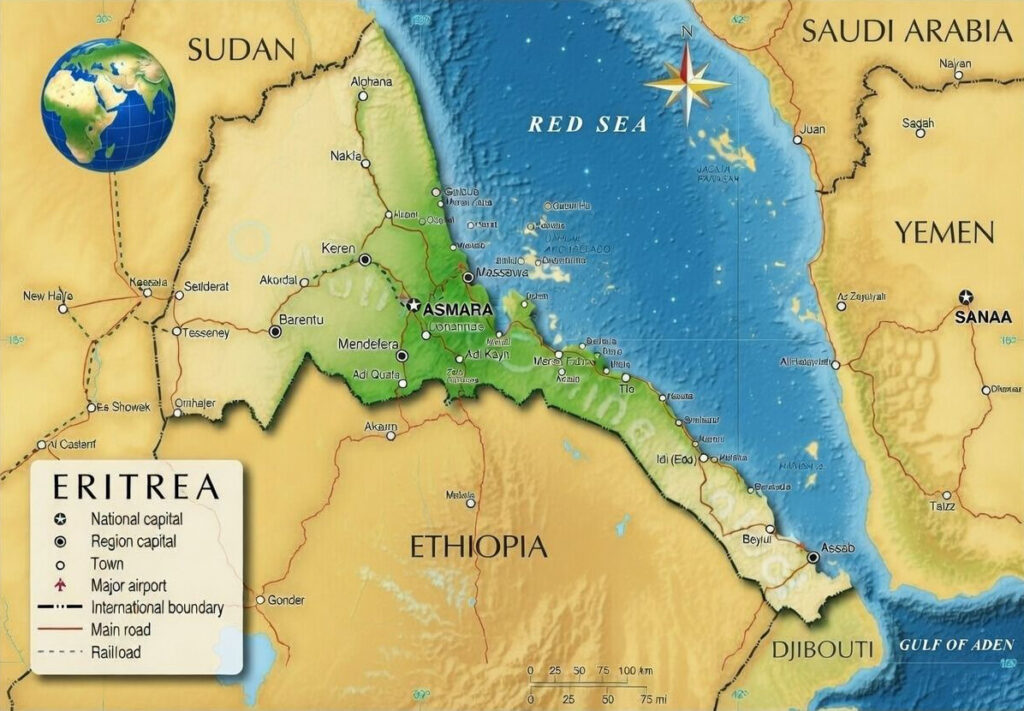
The capital, Asmara, sits at over 2,300 metres above sea level – one of the highest capital cities in the world. Its wide boulevards, futuristic buildings from the Italian colonial era, and the famous Art Deco cinema have earned it the nickname “Little Rome of Africa”. From here, the country is divided into six regions:
- Maekel (home to the vibrant capital Asmara)
- Debub (Mendefera) – the fertile highlands in the south
- Gash-Barka (Barentu) – the vast western plains
- Anseba (Keren) – mountainous and diverse
- Semienawi Kayih Bahri (Massawa) – the historic port city on the Red Sea
- Debubawi Kayih Bahri (Assab) – the southern coastal strip with its salt lakes and coral reefs
The People: A Fascinating Blend of Tradition and Unity
Today, Eritrea is home to an estimated 3.6 to 4 million people (current estimates vary, as official census data is limited). Around 80% of the population earns their living from agriculture – often under harsh conditions in a land shaped by droughts and rugged mountains. The remaining 20% work in industry, trade, or services.
What makes Eritrea truly special: Despite deep religious differences – roughly half the population is Sunni Muslim, the other half Christian (mainly Eritrean Orthodox Tewahedo Church, with Catholics and Protestants) – there is a strong national identity. Conflicts between faiths are rare; instead, people are bound together by shared history and pride in the hard-won independence.
Nine officially recognized ethnic groups shape the country, each with its own language, traditions, and heritage. The largest are the Tigrinya (about 50%) and the Tigre (about 30%). Their roots trace back to Nilotic, Cushitic, and Semitic origins – a melting pot reflected in nine equal national languages: Tigrinya, Tigre, Afar, Saho, Kunama, Bedscha (Bilen/Hedareb), Nara, Rashaida Arabic, and Arabic as a second language for many Eritreans.
A History Full of Struggle and Triumph
Eritrea’s past reads like an epic: Ottomans, Egyptians, and especially the Italians ruled the land over centuries. Italian colonial rule (from 1890) left not only impressive architecture in Asmara but also deep cultural and infrastructural traces.
After World War II, Eritrea was annexed by Ethiopia against the will of its people – an act that sparked one of Africa’s longest and bloodiest liberation wars. For 30 years (1961–1991), Eritreans fought for their freedom. In 1991, the country finally gained independence – a moment of collective pride that still defines national identity today.
Since independence, Isaias Afwerki has led the country as president. In office since 1993, he embodies the unyielding will for sovereignty for many – even though his government faces international criticism.
Eritrea is more than just a point on the map. It is a country that, despite all its challenges, offers a unique mix of resilience, cultural diversity, and breathtaking landscapes – from the coral reefs of the Red Sea to ancient sites in the mountains and the lively markets of Asmara. Anyone who engages with it discovers an Africa that is different – proud, multifaceted, and full of stories waiting to be told.
Discover the Diversity of Eritrea: A Journey Through Its Ethnic Groups
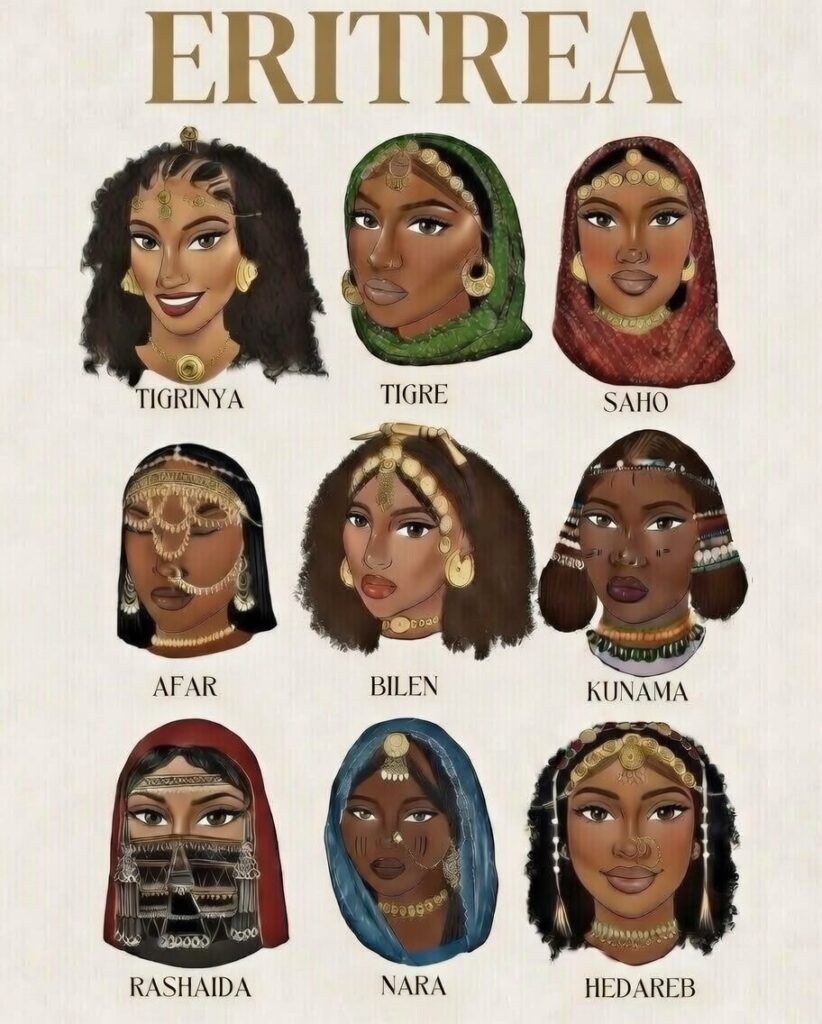
Eritrea, a country rich in cultural diversity, is home to a fascinating mix of ethnic groups, each bringing its own unique history, language, and traditions. From vast plains to picturesque coastal regions, Eritrea is a melting pot of cultures. Here we take a look at the nine officially recognized ethnic groups that inhabit this fascinating land:
1. Tigrinya
The Tigrinya are the largest ethnic group in Eritrea, making up about half of the population. They are predominantly settled in the central highlands and speak Tigrinya, a Semitic language. The Tigrinya are known for their rich oral traditions, hospitality, and vibrant cultural festivals.
2. Tigre
The Tigre are another significant ethnic group, mainly living in the north and northwest of the country. Their language, Tigre, is closely related to Tigrinya. The Tigre are often engaged in agriculture and livestock herding and proudly preserve their cultural identity.
3. Saho
The Saho community is based in the south and east of Eritrea. They speak Saho, a Cushitic language, and are known for their craftsmanship and traditional way of life. The Saho have a rich oral tradition of stories and legends.
4. Afar
The Afar, mainly residing in the southeast and coastal areas of the country, speak Afar, an Afroasiatic language. Known for their semi-nomadic lifestyle and skills in trade and salt extraction, they give Eritrea’s landscape a distinctive cultural imprint.
5. Bilen
The Bilen are a smaller ethnic group, primarily living in the west and south of Eritrea. They speak Bilen, a Semitic language, and are known for their agricultural skills and cultural traditions.
6. Kunama
The Kunama, mainly settled in the western border regions near Ethiopia, speak Kunama, a Cushitic language. They have a rich tradition in agriculture and crafts, and their cultural identity is closely tied to the land and its nature.
7. Rashaida
The Rashaida are an ethnic group living in Eritrea’s coastal areas. Known for their nomadic lifestyle and trading skills, they enrich Eritrea’s diversity with their unique cultural character.
8. Nara
The Nara are a small but significant ethnic group in southern Eritrea. Their way of life and agricultural practices are reflected in their language, the Nara language.
9. Hedareb
The Hedareb community, mainly based in the western part of Eritrea, speaks Hedareb (a Beja dialect) and is known for its livestock herding and strong family structures.
Eritrea is therefore not just a geographical place, but also a living mosaic of diverse cultures and traditions. The country’s ethnic diversity is a source of strength and a fascinating element of its identity. From the green valleys to the arid deserts, the rich history and heritage of Eritrea are reflected in the diversity of its people.